| |
|
WORKLOAD OF ENDOSCOPY UNITS
The number of weekly endoscopy sessions is correlated with the annual number of patients undergoing an endoscopy within an endoscopy unit (Figure 4). However, it should be noted that the data represented includes only 42% (81/194) of the hospitals that submitted a questionnaire on endoscopy facilities. Missing data has prevented us showing a complete picture. Assuming that the information was not returned because it was unknown to the hospital then one has to question how departments can operate without knowing this basic information. The BSG Report1 recommends that an average DGH performing 2,500-3,000 endoscopies per annum should allow 12-14 sessions per week which is broadly consistent with data reported in Figure 4. There is also a reasonable correlation between the number of endoscopies performed and the number of inpatient beds within the hospital (Figure 5). The data in this graph represents 74% (144/194) of the hospitals that submitted a questionnaire on endoscopy facilities.

NB: Only 42% (81/194) of hospitals are represented. The remaining hospitals did not provide this information.
Figure 4. Number of sessions by the annual numbers of patients undergoing endoscopy (Numbers of hospitals are indicated by the figure within the shaded boxes)
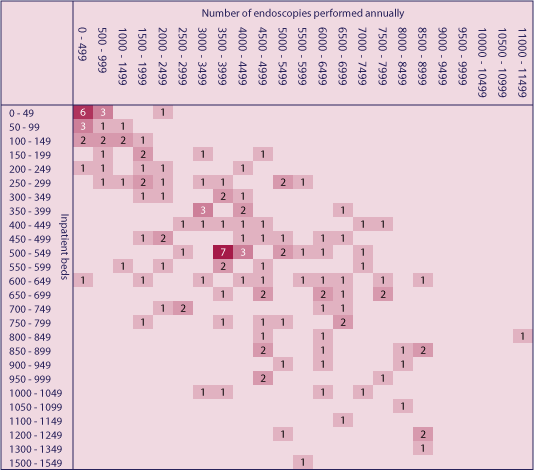
NB: 74% (144/194) of hospitals are represented. The remaining hospitals did not provide this information.
Figure 5. Annual number of endoscopies performed by number of inpatient beds
| (back to top) |